
Hawaii DUI Records
Hawaii handles drunk driving cases under the offense name OVUII, short for Operating a Vehicle Under the Influence of an Intoxicant. DUI records in Hawaii include court case files, certified traffic abstracts, and criminal history records maintained by state courts, county police departments, and the Hawaii Criminal Justice Data Center. You can search Hawaii DUI records through the free eCourt Kokua online system, in person at any district court, or through the HCJDC criminal history check process. This guide explains what each system holds, how to request records, and what you should expect to find.
Hawaii DUI Records at a Glance
What Hawaii DUI Records Include
Hawaii DUI records cover several distinct types of documents. Court case files show the charges filed, plea entered, hearing dates, and final disposition of each OVUII case. Traffic abstracts are certified documents that list all alleged moving violations and any resulting convictions, plus any administrative license revocations tied to a driver's record. Criminal history records from the Hawaii Criminal Justice Data Center show adult conviction data for the entire state, including OVUII convictions from all counties. Each record type serves a different purpose and comes from a different agency.
Traffic abstracts are the most widely requested document for DUI-related purposes. Under HRS Section 287-3, a certified traffic abstract shows all alleged moving violations and any convictions, as well as any administrative license revocations. Parking and equipment violations do not appear, which is why the abstract is sometimes called an abbreviated abstract. The fee is $20 at any district courthouse, and you can request one by mail with a money order and a self-addressed stamped envelope.
Criminal history records are a different matter. The HCJDC maintains the state's central repository. Arrest records that resulted in adult convictions are public. Records that ended in non-conviction or that are still pending are confidential and not available to the general public.
The Hawaii State Judiciary eCourt Kokua system shows what traffic case records are available for free online, covering case status, party names, and docket entries from Hawaii district courts.
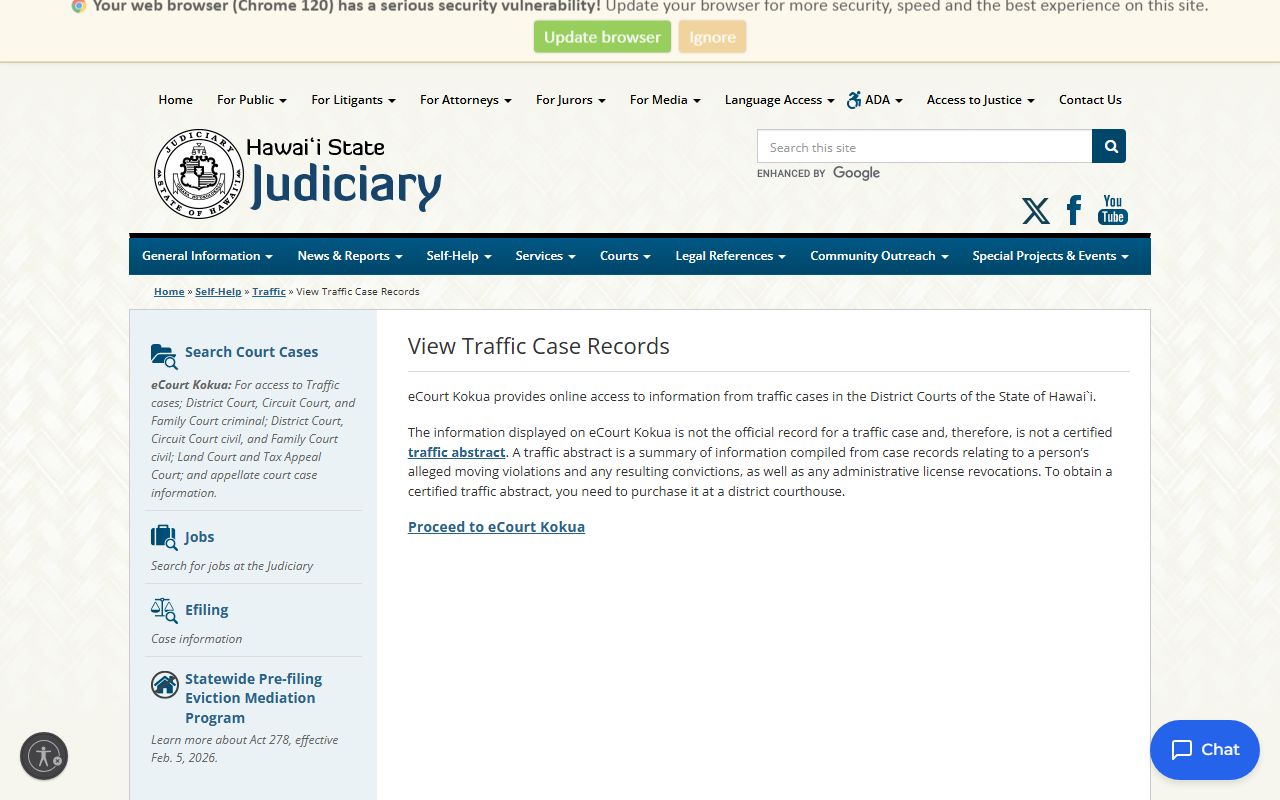
eCourt Kokua shows traffic case information but is not the official certified record. For certified documents you must visit or write to a district courthouse.
Hawaii OVUII Law and DUI Charges
Hawaii does not use the DUI label in its statutes. The state calls the offense OVUII. Under Hawaii Revised Statutes § 291E-61, a person commits OVUII if they operate or assume actual physical control of a vehicle while under the influence of alcohol sufficient to impair their normal mental faculties, while under the influence of any drug that impairs driving ability, with a blood alcohol content of .08 or more grams per 210 liters of breath, or with .08 or more grams of alcohol per 100 milliliters or cubic centimeters of blood.
First-offense penalties are built into the statute itself. Courts must sentence without the possibility of probation or suspension of sentence. At minimum, a first OVUII conviction brings a 14-hour substance abuse rehabilitation program including education and counseling, revocation of the driver's license for no less than one year and no more than eighteen months, installation of an ignition interlock device during the revocation period, and either 72 hours of community service work, 48 hours to five days of imprisonment, or a fine between $250 and $1,000.
A second OVUII within ten years is significantly more serious. The law requires at least 30 days of imprisonment, 240 hours of community service, a fine between $500 and $1,500, and a two-year license suspension with a mandatory ignition interlock device. Each prior conviction within the ten-year window raises the stakes further.
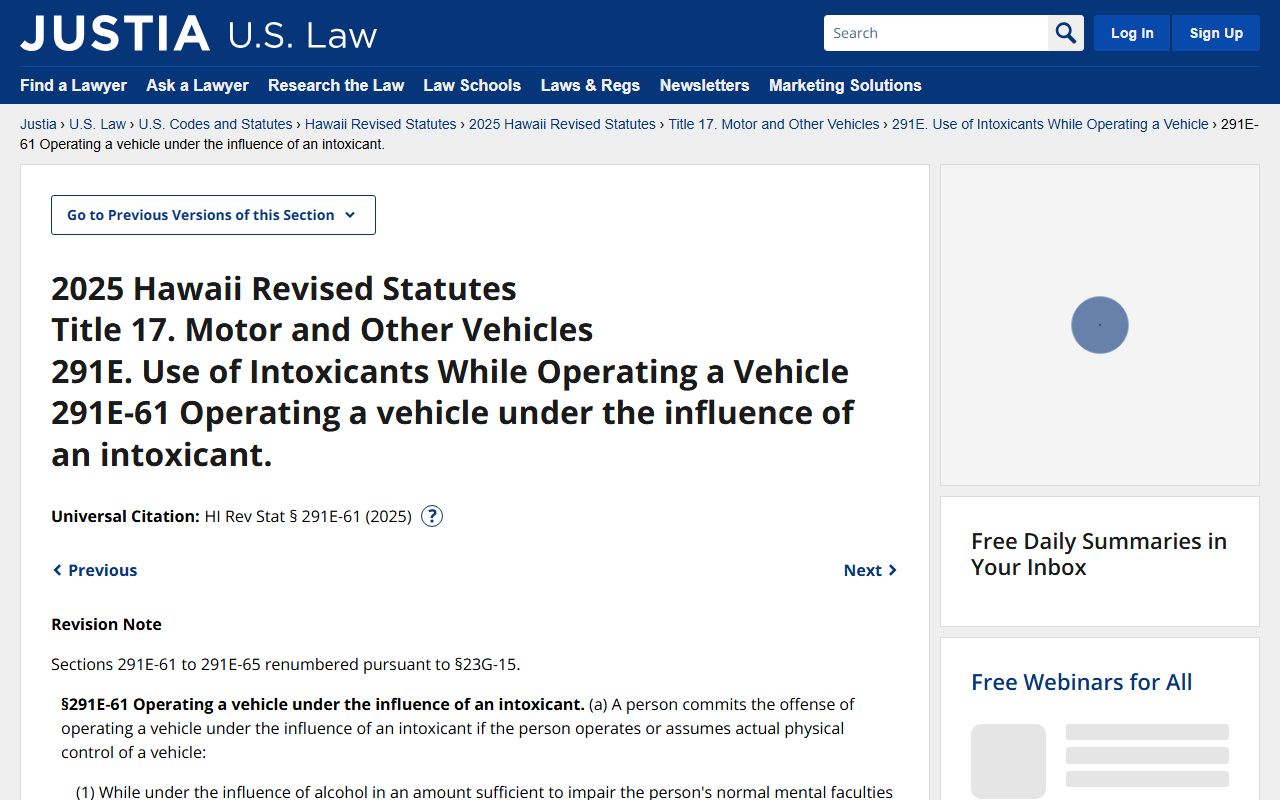
The full text of HRS § 291E-61 sets out each tier of offense, ignition interlock requirements, and the penalties that courts must impose without possibility of early relief through probation.
HRS §291E-61.5 addresses habitual OVUII. Three or more prior DUI convictions convert the new offense into a Class C Felony. Penalties include up to five years in prison or five years of probation, a mandatory ten-day jail term, license revocation of one to five years, a $25 neurotrauma surcharge, and possible vehicle forfeiture. Separately, HRS §291E-64 targets drivers under 21, setting the threshold at a .02 BAC or above. That offense is classified as a violation, not a misdemeanor, but it still generates a court record and an administrative license action.
How to Search DUI Records in Hawaii
There are three main paths for searching Hawaii DUI records. Online search through eCourt Kokua is free and accessible from any device. In-person requests at district courts let you get certified copies on the same visit. And the Hawaii Criminal Justice Data Center processes name-based and fingerprint-based criminal history checks that include DUI conviction information statewide.
The Hawaii State Judiciary court records search page links directly to eCourt Kokua. The system covers traffic cases, district court criminal cases, circuit court criminal cases, family court criminal cases, and appellate cases. You can search by name or by case ID. The system shows party names, case status, hearing dates, and docket entries. It does not include sealed or confidential cases, and some document images are only viewable at the courthouse itself.
For a certified traffic abstract, you visit any district court in person or mail a written request. You need the person's full name and ideally their date of birth and driver's license number. If only a name is provided and multiple records match, you may need to purchase all matching records. The cost is $20 per abstract. Traffic court reports, which also include parking and equipment citations, cost $1 for the first page and 50 cents for each additional page and must be obtained in person with a photo ID.
The eCourt Kokua case search guide explains how to format case IDs and navigate the system across all four circuit courts, including older TRAVIS-era records from before 2005.
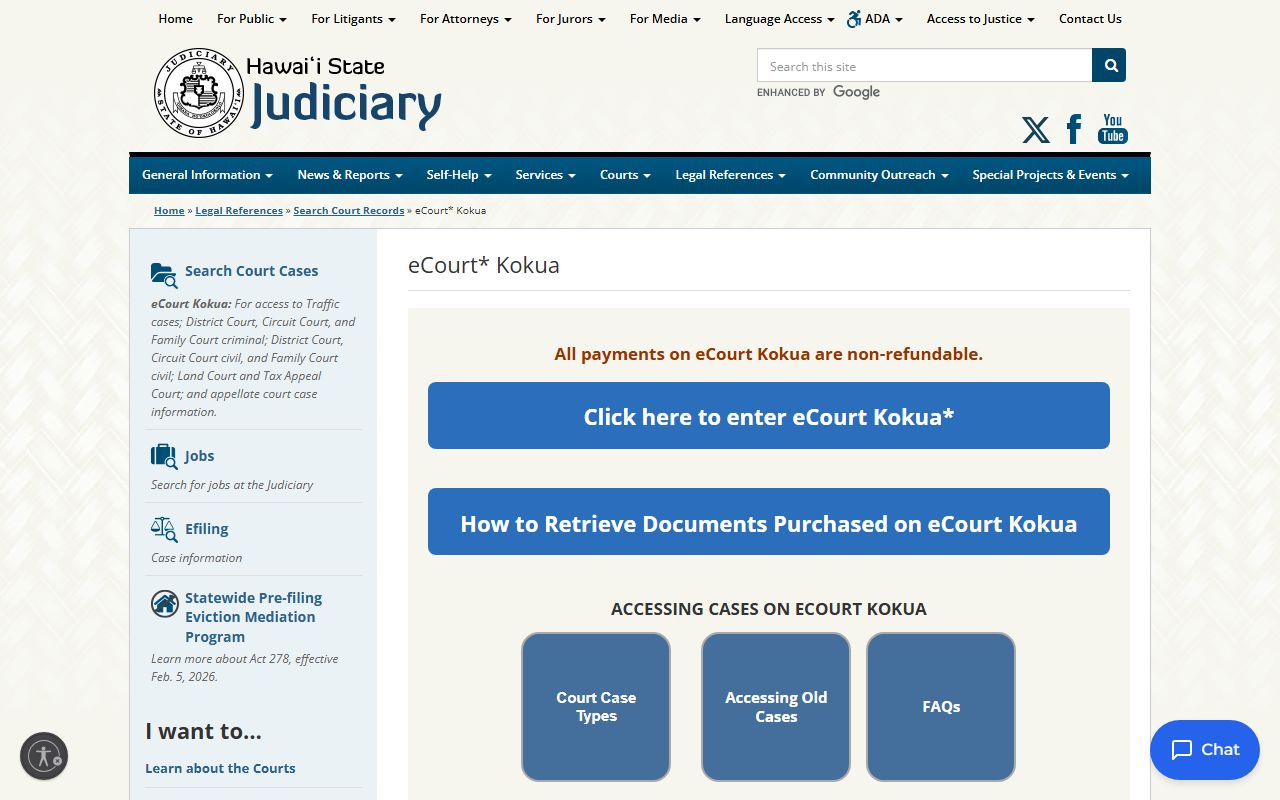
The guide covers case ID formats for First through Fifth Circuit courts, helping users find DUI and OVUII records whether they were filed last year or a decade ago.
Hawaii Criminal Justice Data Center and DUI Records
The Hawaii Criminal Justice Data Center is the official statewide repository for criminal history information. What some people call a "Police Clearance" or "Police Abstract" comes from the HCJDC. It only includes adult criminal conviction information. Arrest records that resulted in convictions are public record. Non-convictions and pending cases are not available to the general public.
The HCJDC offers name-based and fingerprint-based background checks. Fingerprint checks are more precise since common names may return multiple records. Other services include the Access and Review process, which lets individuals check their own records. The center is at 465 South King Street, Room 102, Honolulu, HI 96813. The main phone is (808) 587-3100 and the Criminal History Record Checks unit is at (808) 587-3279.
Online access is available through the eCrim portal, which lets you search for and purchase conviction records. Each unique search costs $5. An official eCrim report is $12. You must finish the search and purchase in a single login session since the system logs you out after 30 minutes of inactivity and any unpurchased searches are lost.
Visit the HCJDC criminal history records page for current request options, fee schedules, and information on both name-based and fingerprint-based check services.
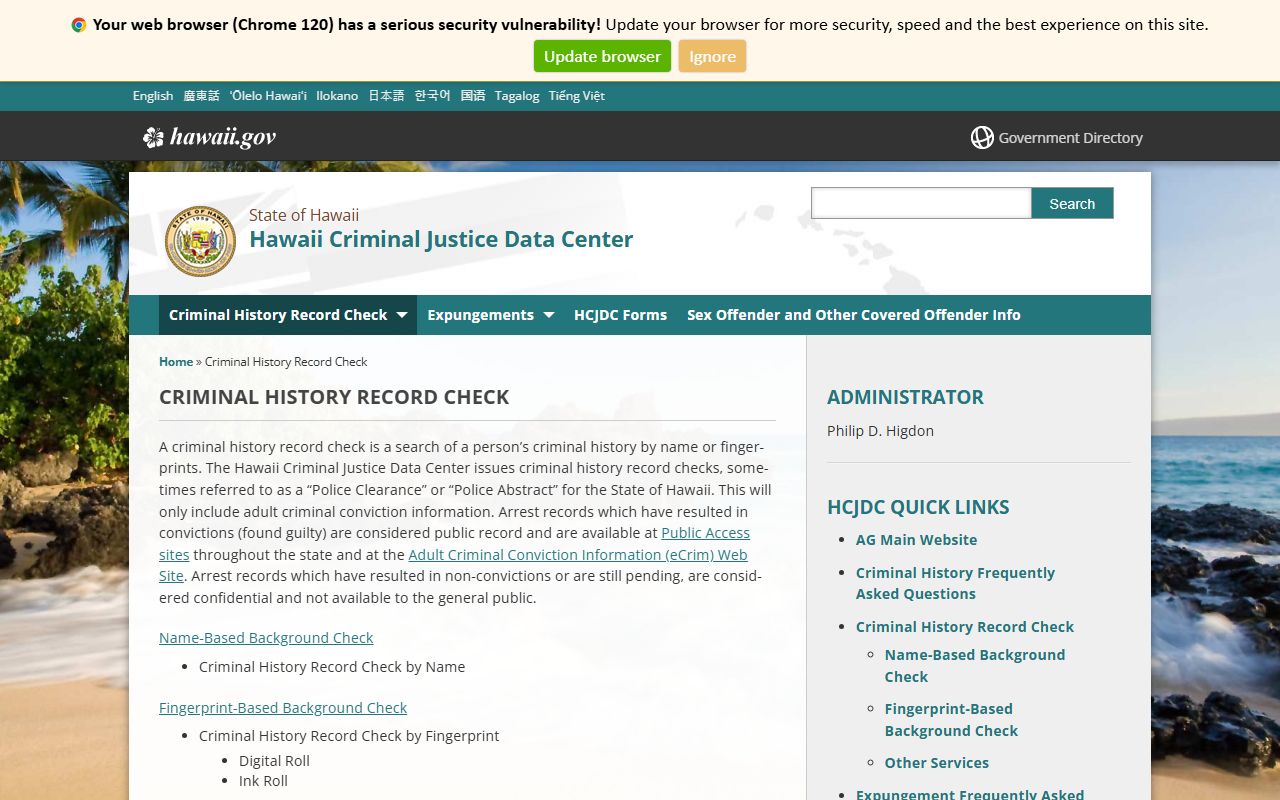
The HCJDC functions as the single statewide source for conviction data, covering all counties and all circuit courts including those on the neighbor islands.
Traffic Abstracts and Hawaii DUI Case Records
Traffic abstracts are certified documents that give a person's traffic case history under HRS § 287-3. They show all alleged moving violations and any convictions that came from them, including OVUII cases. They also show any administrative license revocations. Because parking and equipment violations do not appear, these documents are sometimes described as abbreviated abstracts. Most people request them for insurance purposes, license-related matters, or to confirm their own driving record.
The Hawaii State Judiciary traffic abstracts page explains how to get abstracts, traffic court reports, and driver history records from any district court location statewide. Each circuit has its own Traffic Violations Bureau with specific hours and contact numbers.
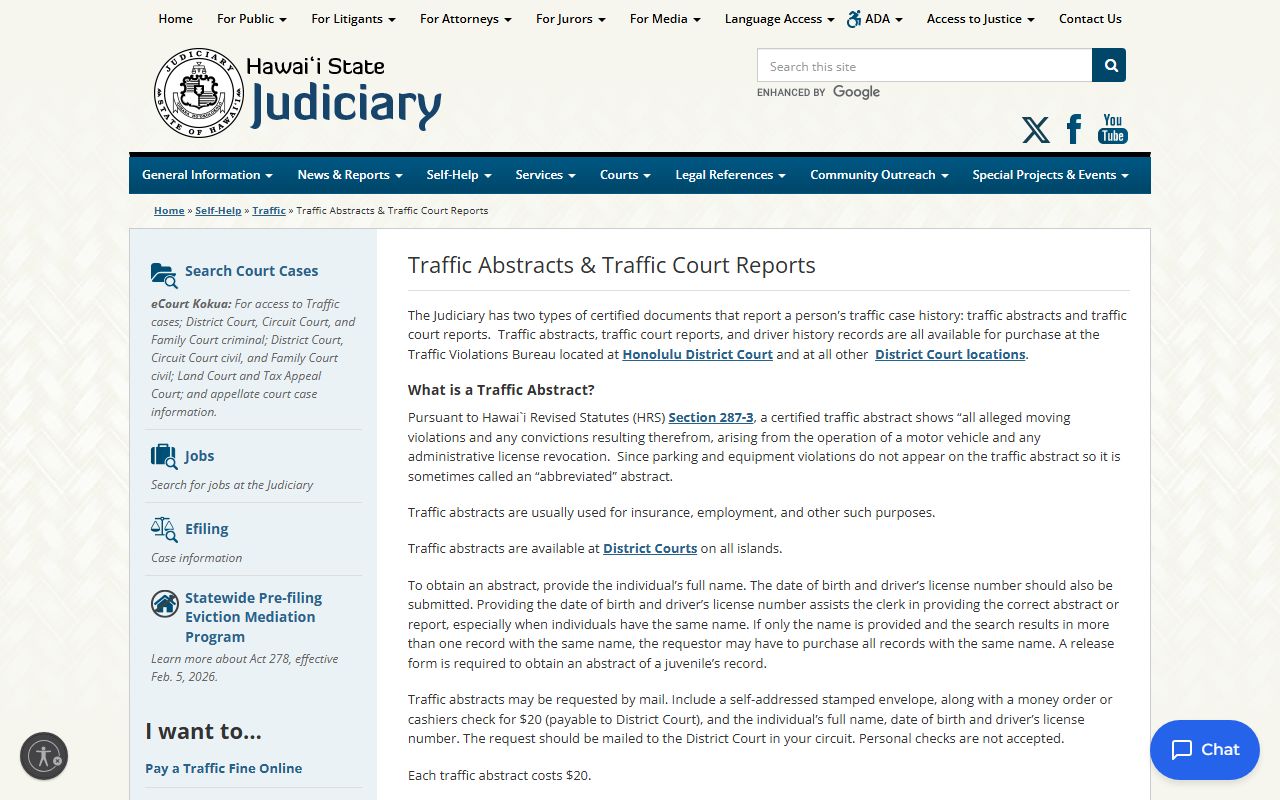
Traffic court reports are the more complete version of the abstract. They add parking and equipment violations and are only available in person at a district court with photo ID for $1 plus 50 cents per additional page.
Administrative License Revocation and OVUII Arrests
An OVUII arrest in Hawaii sets off two separate processes. The criminal case moves through district or circuit court. The administrative case moves through the Administrative Driver's License Revocation Office, known as the ADLRO. The ADLRO handles reviews and hearings related to revocation of driving privileges for people arrested under HRS § 291E-61 or § 291E-61.5. The process starts at the moment of arrest. Your license can be revoked within 30 days. The ADLRO has 8 days from the arrest to decide whether to revoke.
The ADLRO issues revocation decisions, sets the length of the revocation period, and issues ignition interlock permits and employee driver's permits to eligible respondents. Respondents and attorneys can file documents by email to respondents.ADLRO@courts.hawaii.gov in PDF, JPG, JPEG, or PNG formats. The chief DUI adjudicator is Karilee Endow Harada. The office number is (808) 534-6800.
License revocations show up on traffic abstracts as administrative actions separate from any criminal conviction. Even if a criminal OVUII case is later dismissed, an administrative revocation can remain on the traffic abstract.
The ADLRO office page has current contact information, filing instructions, and the full timeline of the administrative revocation process from arrest through final decision.
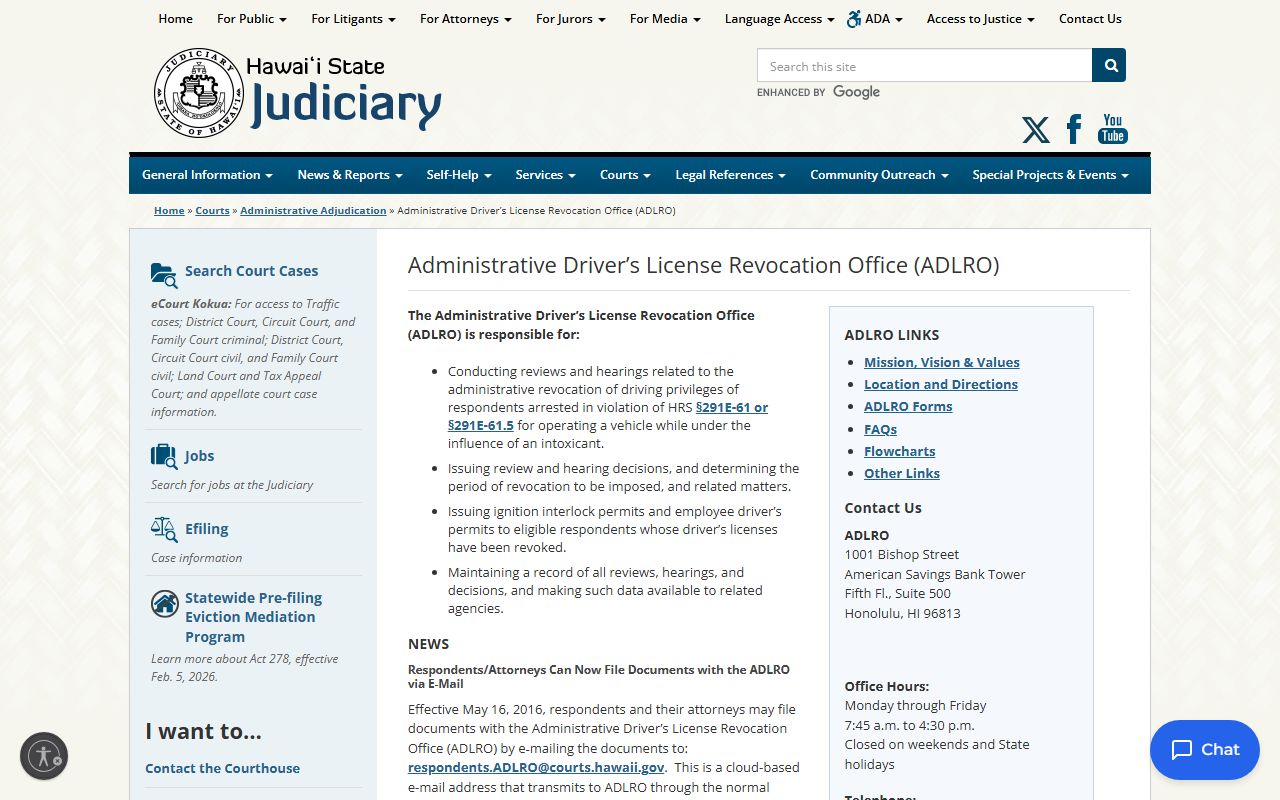
The ADLRO maintains records of all reviews, hearings, and decisions and makes that data available to courts, law enforcement, and related agencies.
Hawaii Driver History Records
The Hawaii Department of Transportation issues Driver History Records through district courts. The fee is $9. You can request one at any district court in person or by writing to any listed district court location. For questions, contact the HDOT at (808) 692-7656.
District court contact numbers for DHR requests: Oahu District Court (808) 538-5500, Ewa/Pearl City District Court (808) 534-6900, Kaneohe District Court (808) 534-6300, Wahiawa District Court (808) 534-6200, Waianae at Kapolei District Court (808) 954-8575, Maui District Court (808) 244-2800, Hawaii District Court (808) 961-7430, and Kauai District Court (808) 482-2355.
Driver history records are designed primarily for commercial drivers and show CDL disqualifying convictions per FMCSA rules. For non-commercial drivers, the DHR may not reflect the final court outcome of a DUI case since it updates from citation rather than from the court disposition. A traffic abstract from the court is more reliable for confirming a final DUI conviction status.
The HDOT driver history record page has the request form, instructions, and a glossary of terms used in the DHR document.
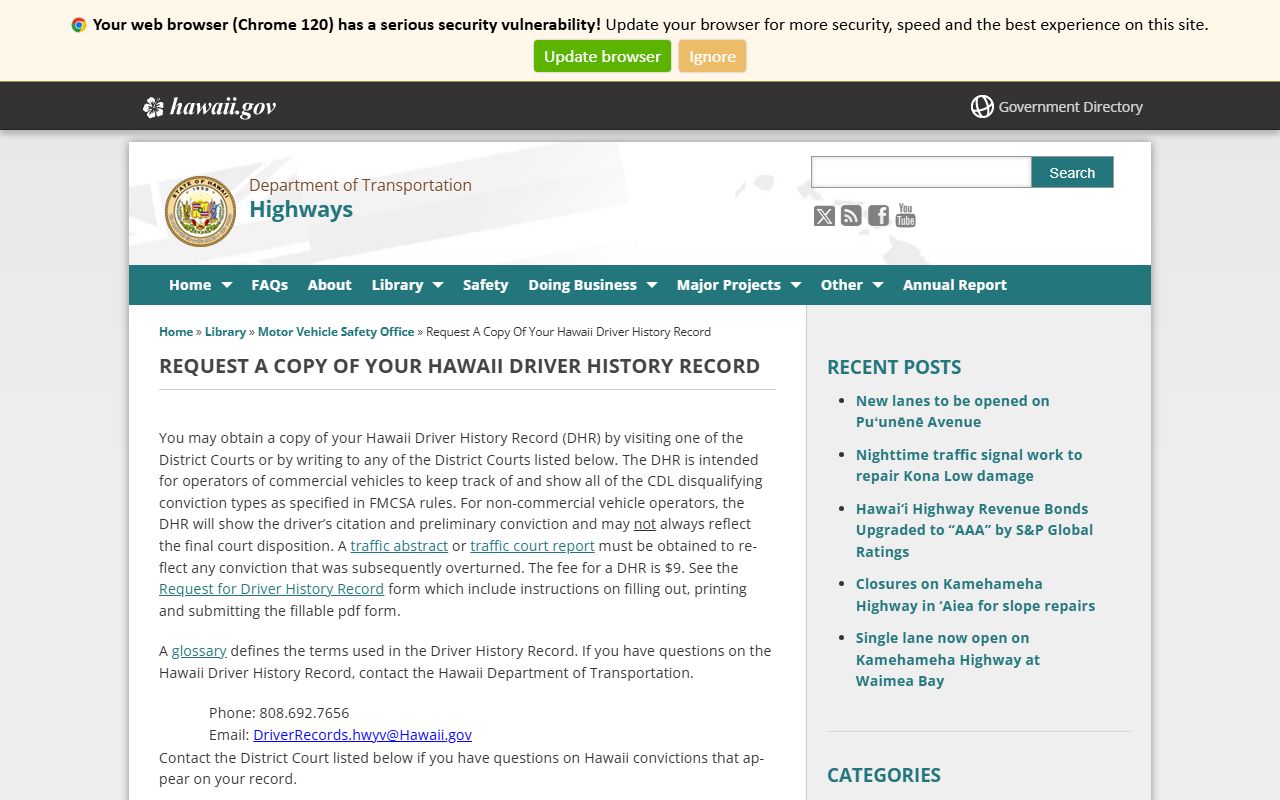
The HDOT form is a fillable PDF that includes submission instructions and a list of all district court mailing addresses for written requests.
eCourt Kokua Online Hawaii DUI Record Search
eCourt Kokua is Hawaii's free online case information system. It covers traffic cases, district court criminal cases, circuit court criminal cases, family court criminal cases, and appellate cases. For OVUII and DUI records specifically, both the traffic case section and the criminal case section are relevant. You can search by name, JIMS ID, or case number. The court records search page links directly into the system.
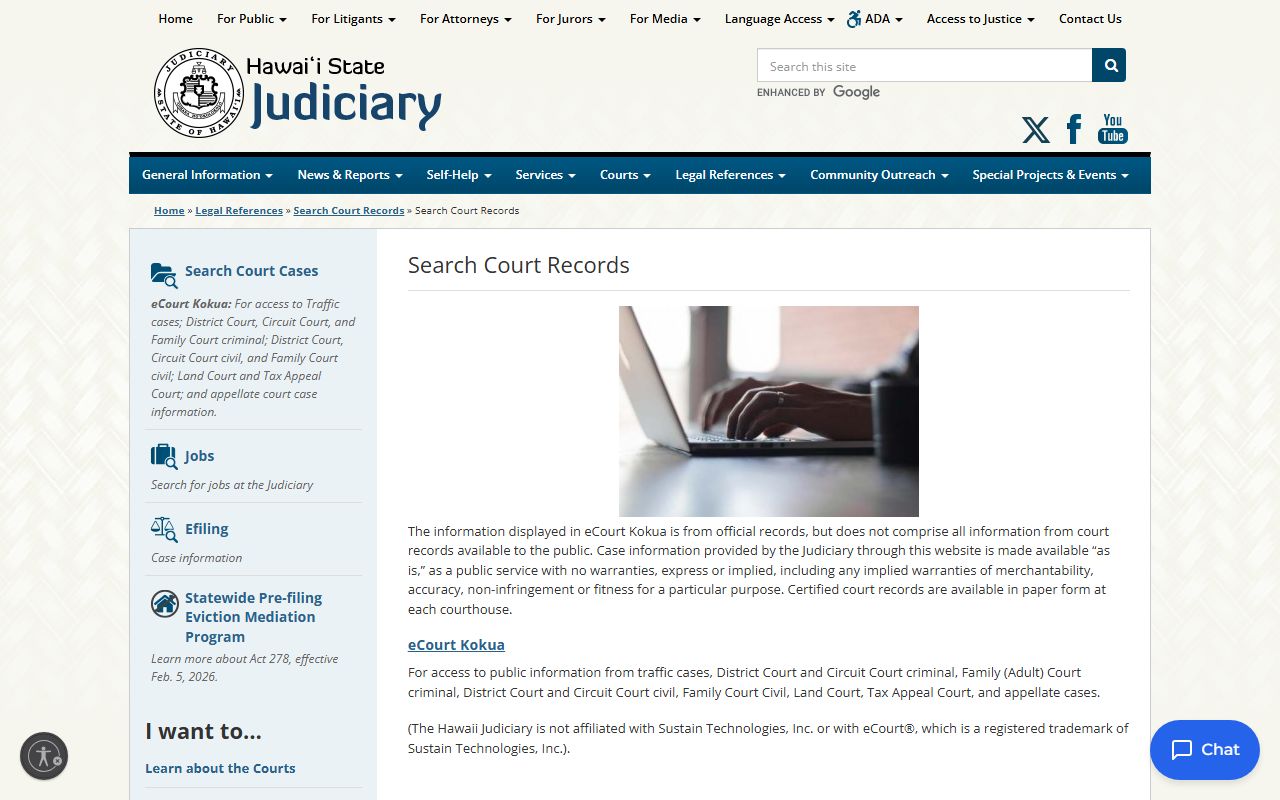
The interface allows filtering by circuit, case type, and year, making it possible to locate OVUII cases from any of Hawaii's four circuit courts without needing to contact a court directly.
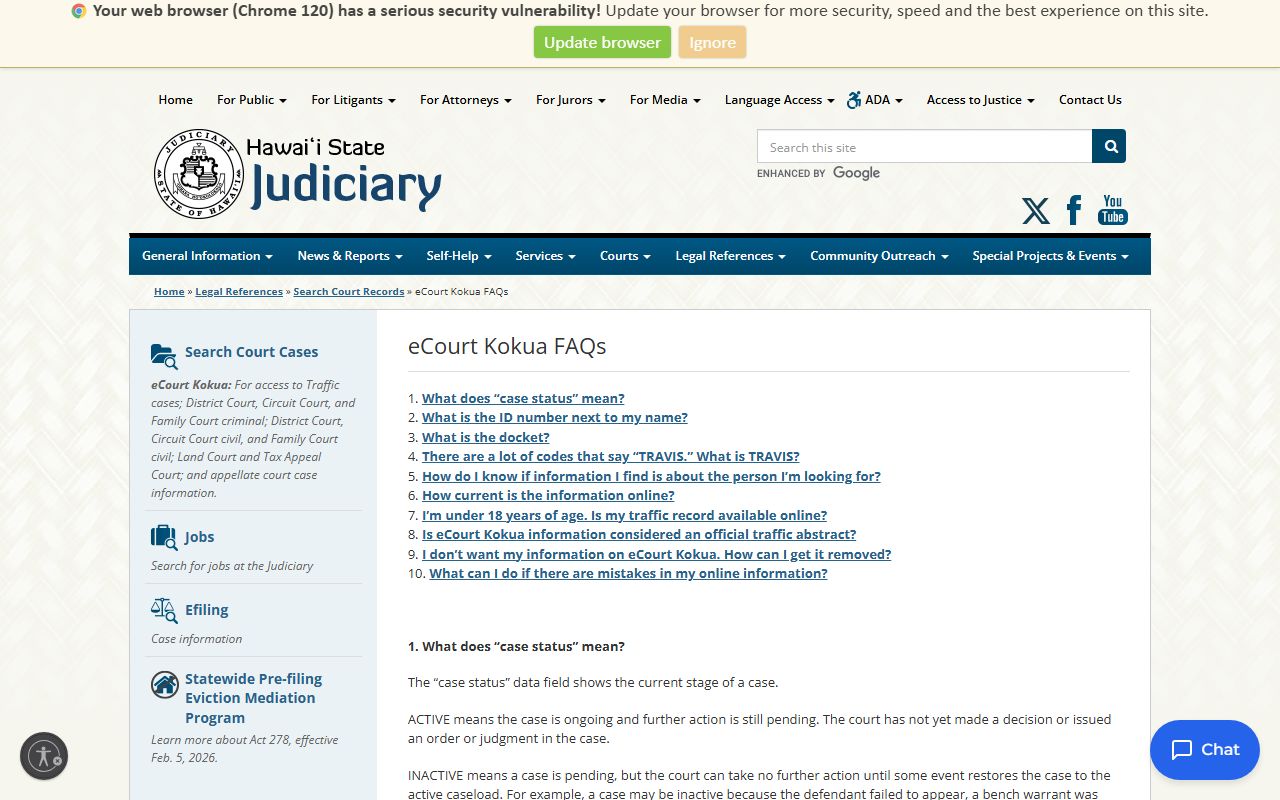
The eCourt Kokua FAQ page explains the difference between TRAVIS codes and the current JIMS system. TRAVIS codes appear in older traffic case records before October 28, 2005, and refer to event types, sentencing actions, case dispositions, financial transactions, and other docket entries. Understanding these codes is helpful when reading older Hawaii DUI records through eCourt Kokua.
Juvenile OVUII records are not available online. A parent or legal guardian must request a juvenile's traffic abstract in person at a state district courthouse, not through the online system.
How Hawaii DUI Cases Progress Through Court
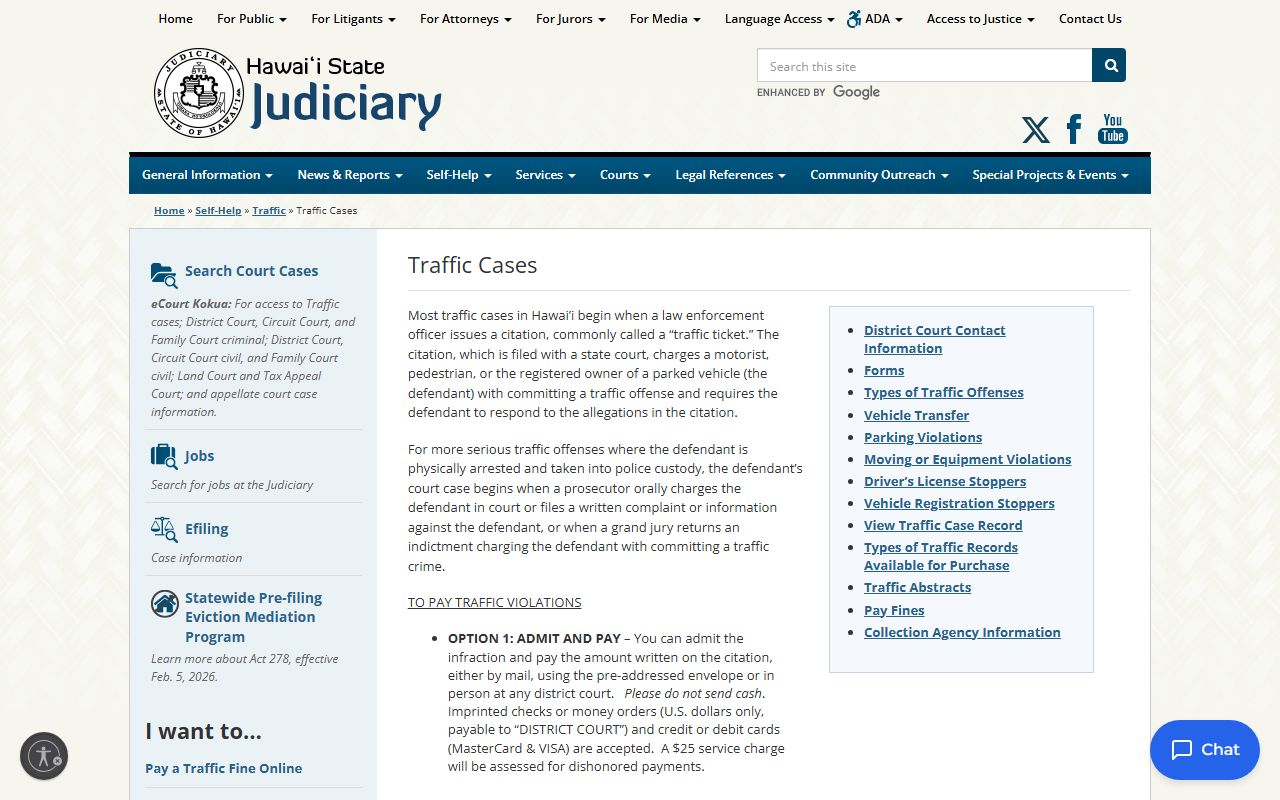
Most Hawaii OVUII cases begin when a law enforcement officer issues a citation. For more serious cases where the person is physically arrested and taken into custody, the case starts when a prosecutor files charges orally in court, through a written complaint, or by grand jury indictment. The Hawaii State Judiciary traffic cases page explains all steps in the court process for traffic offenses including OVUII.
Once a case is entered in the system, it becomes accessible through eCourt Kokua, though there is typically a delay between when a ticket is issued and when court staff input the data into the database.
After a DUI case resolves, the record stays in the court system permanently. Conviction records also flow to the HCJDC. An OVUII conviction shows up in both traffic abstracts and criminal history checks. If a case is dismissed or results in no conviction, it will not appear in a standard public HCJDC check, but it may still be visible in eCourt Kokua for some period of time depending on the case type and how it was closed.
Hawaii's implied consent law plays a role in the record trail. Anyone who drives on public roads in Hawaii is deemed to have given consent to chemical testing. Refusing a test triggers its own license revocation through the ADLRO, entirely separate from criminal proceedings. That refusal and its resulting revocation appear on the traffic abstract even if the criminal case never results in a conviction.
Habitual OVUII and Felony DUI Charges
Three or more prior DUI convictions convert a new OVUII charge into a Class C Felony under HRS §291E-61.5. Felony OVUII cases are heard in circuit court rather than district court, which changes where and how those records are stored. The penalties include an indeterminate term of up to five years in prison or five years of probation, a mandatory ten-day jail term, referral to a certified substance abuse counselor, a $25 neurotrauma surcharge, license revocation for one to five years, possible vehicle forfeiture, and mandatory substance abuse assessment and treatment.
The Honolulu Police Department has a specific protocol for these arrests. If someone has one prior Habitually OVUII conviction or two or more prior petty misdemeanor OVUII convictions within the last ten years, the current offense is reclassified to Habitually OVUII. Prior convictions are verified through the HCJDC, JJIS, or judicial records before reclassification. Once reclassified, the arresting desk sergeant notifies the Vehicular Homicide Section at HPD.
The First Circuit Court in Honolulu runs a DWI Court Program for repeat offenders. The program provides court-supervised substance abuse treatment as part of the sentencing process. Its goal is reducing recidivism and protecting public safety through structured rehabilitation rather than incarceration alone. Records from DWI Court participants remain in the court system and are subject to the same public access rules as standard OVUII cases.
Are Hawaii DUI Records Public
Hawaii DUI and OVUII records are generally public. Court records are accessible to anyone under Hawaii's Uniform Information Practices Act, codified as HRS Chapter 92F. You do not need to be a party to the case. You do not need to explain why you want the records. Most of the case file is open to anyone who asks at the courthouse.
Conviction records at the HCJDC are public and available online through the eCrim portal or in person at the center. Non-conviction records, sealed cases, and cases still pending are not publicly accessible. Juvenile OVUII records are confidential and only available to parents or legal guardians who request them in person at a district court. Some court documents that would otherwise be public at the courthouse are not available through the online system, but they can be viewed or copied during courthouse business hours.
Social security numbers, account numbers, and similar personal identifiers are redacted from the public-facing portions of eCourt Kokua. But charges, pleas, sentencing details, and docket entries are visible to anyone who searches. That information is the core of most Hawaii DUI record requests.
Browse Hawaii DUI Records by County
Each of Hawaii's five counties has its own court system and police department that handles OVUII and DUI cases. Select a county below for local records resources, court contacts, and request procedures.
DUI Records in Major Hawaii Cities
Find OVUII and DUI case records for major cities across Hawaii. Each city page lists local police contacts, court locations, and record request procedures specific to that area.